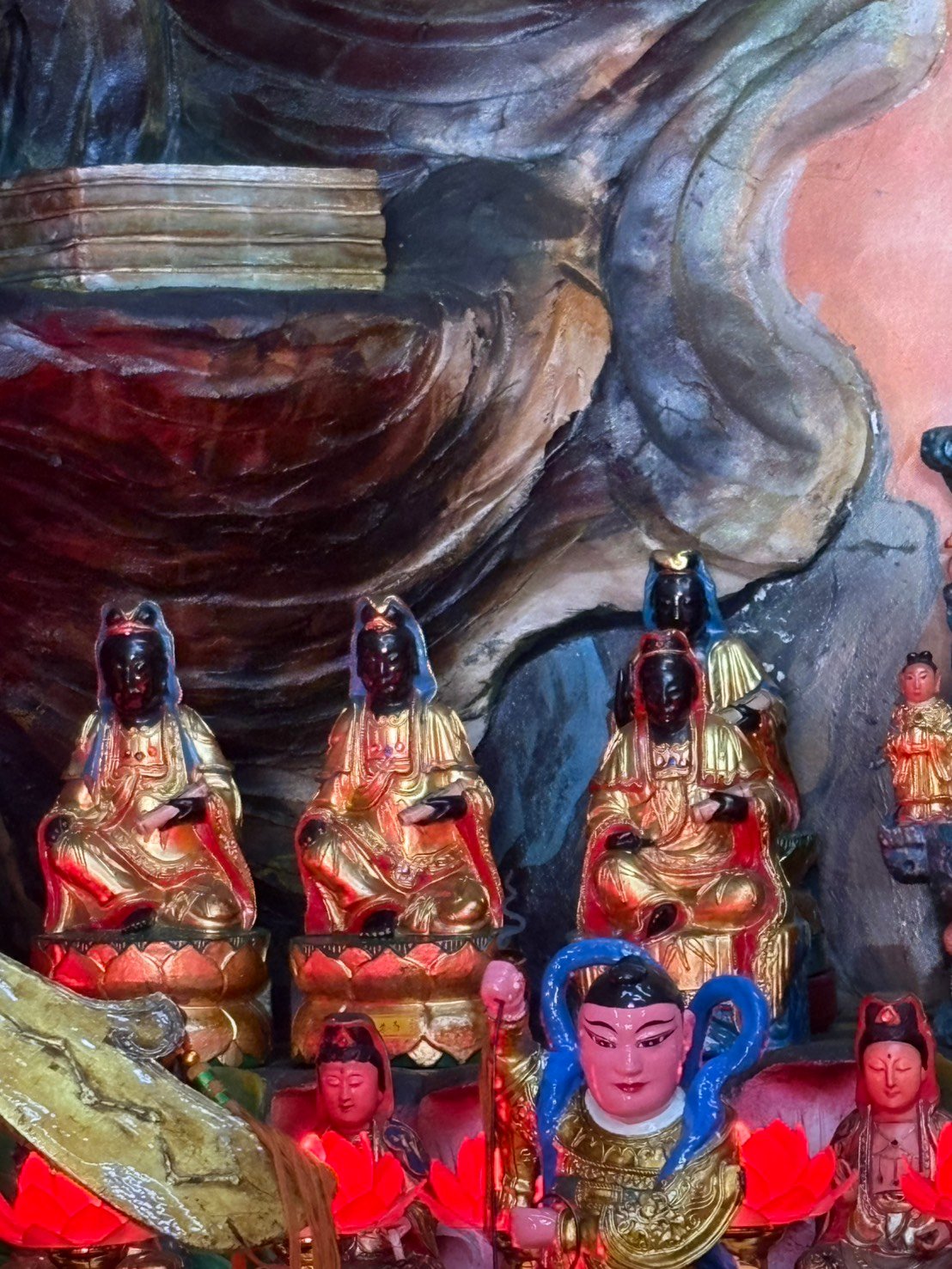
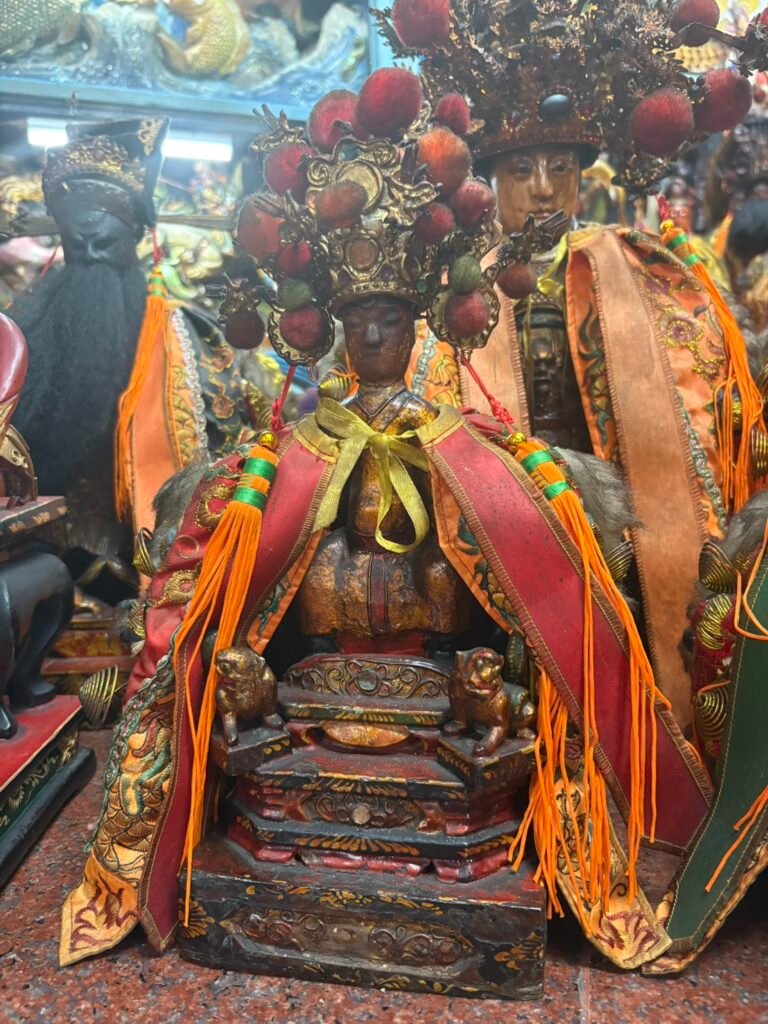
Among the many forms of Guanyin found throughout Taiwan, few are as visually striking as the Black-faced Guanyin. At first glance, it is the polished black face that commands attention. The softly rounded features, gently lowered eyes, and subtle smile create an expression of quiet compassion and profound serenity. Framed by a simple headdress and glowing softly within the temple, the image possesses a quiet beauty unlike the more familiar depictions of Guanyin found throughout Taiwan that feature a lighter colored complexion.
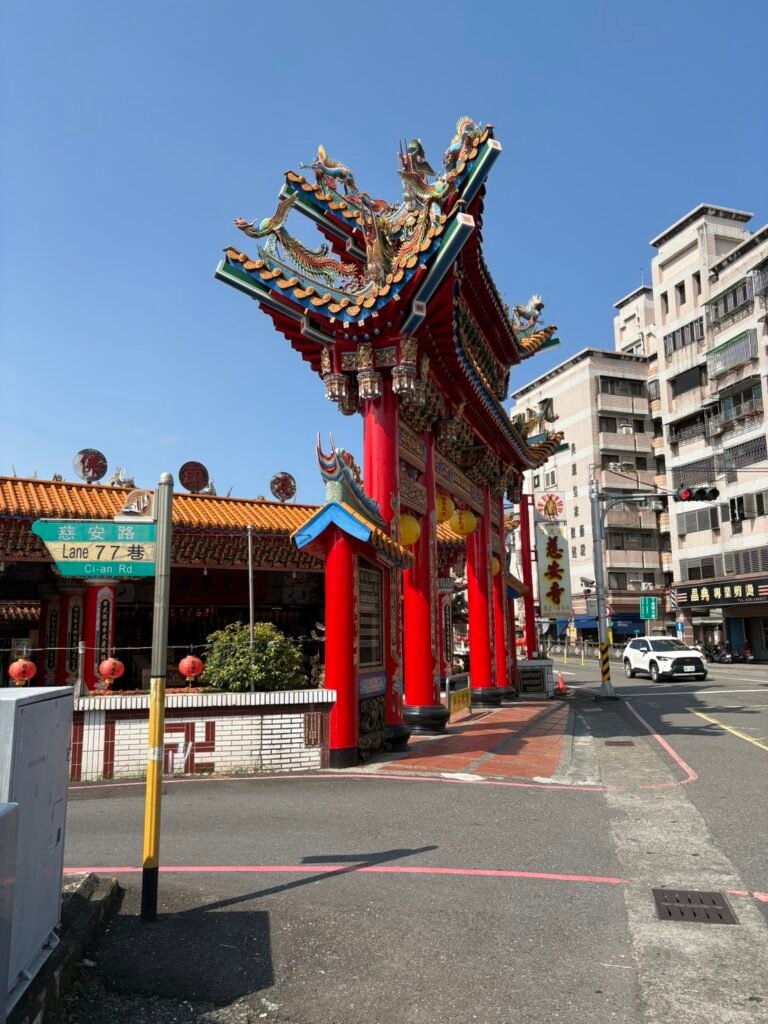
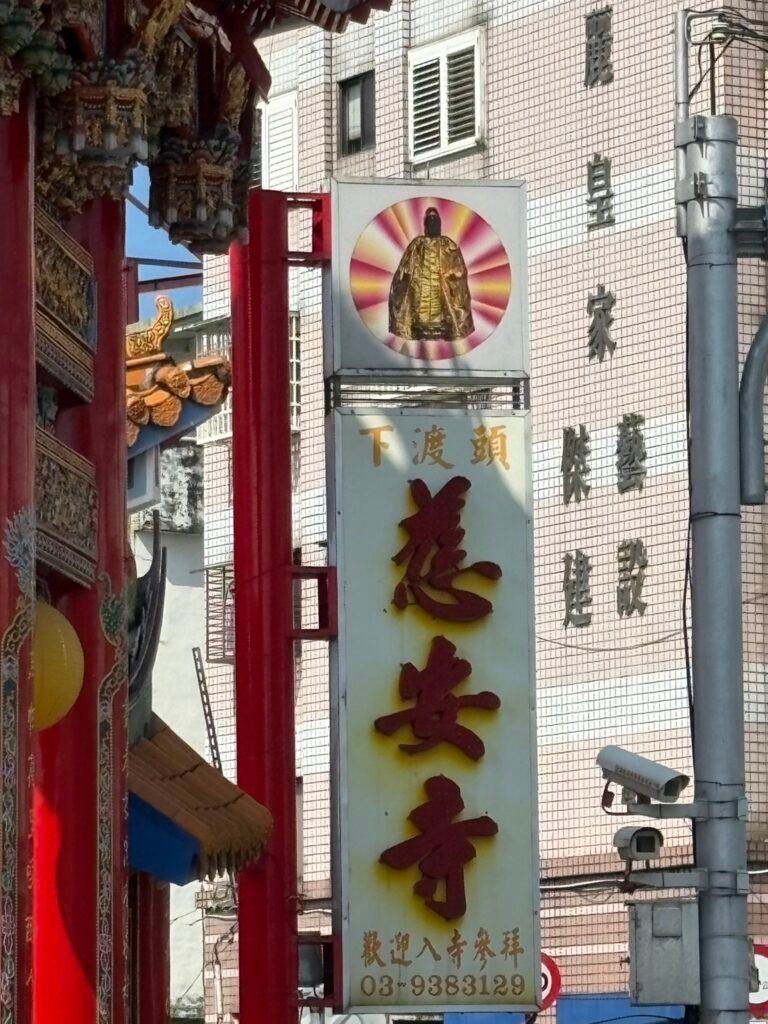
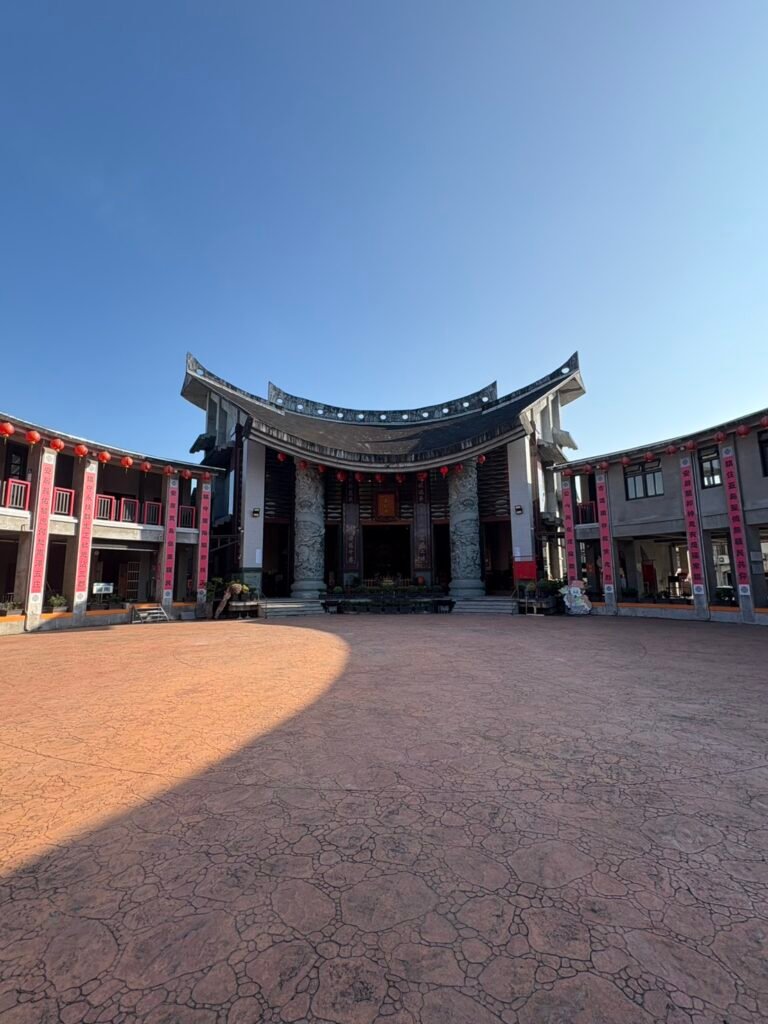
Among Yilan’s many temple traditions, the Black-faced Guanyin occupies a unique place. The tradition centers on Cian Temple (慈安寺) in Yilan City, whose origins date to 1745, making it one of the oldest surviving places of worship on the Lanyang Plain. According to the temple’s own history, the original shrine stood near Wushi Harbor before being relocated inland to its present location.
Temple tradition relates that the original image of Guanyin was carved from a piece of driftwood that washed ashore on the coast. During the Japanese period, the temple suffered a devastating fire. Although the statue survived, its face was permanently blackened by smoke and flames. Rather than replacing the damaged image, local devotees came to regard its blackened face as sacred. Over time, the Black-faced Guanyin became the defining symbol of the temple and one of the most distinctive forms of Guanyin worship found anywhere in Taiwan.
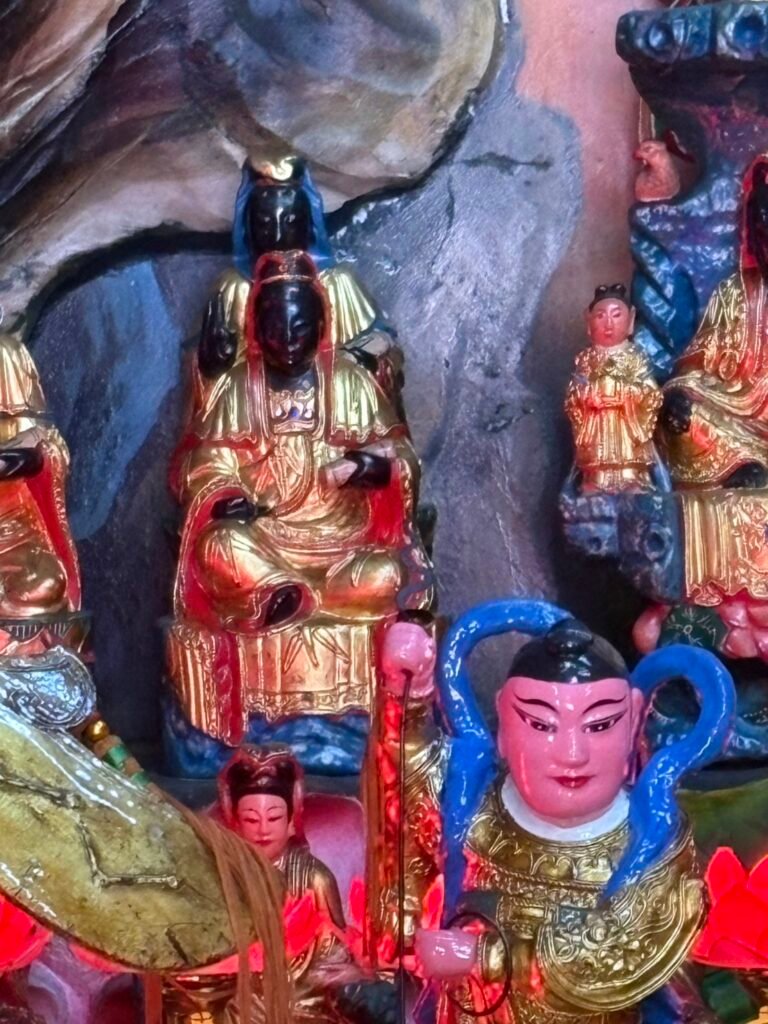
Local tradition further maintains that smaller Black-faced Guanyin statues were once taken from Cian Temple and enshrined in other temples throughout the Yilan Plain, helping spread this distinctive form of worship across the region. Whether every surviving example can be traced directly to Cian Temple is difficult to determine today, but there is little doubt that the temple played the central role in preserving and transmitting this unique local tradition.
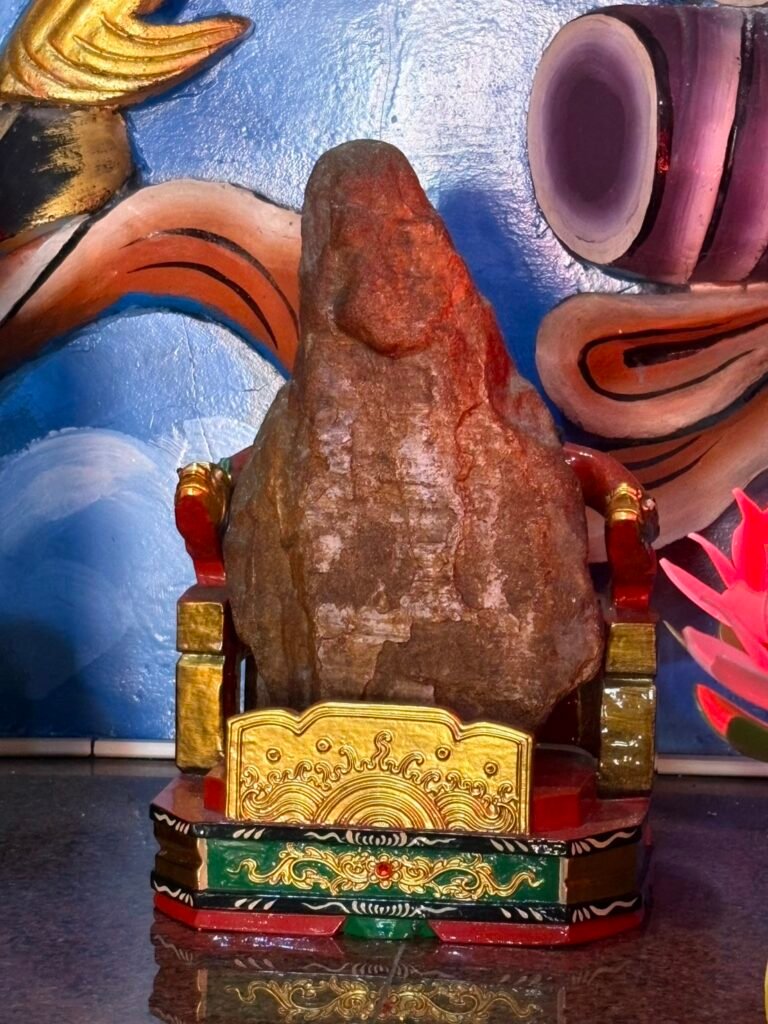
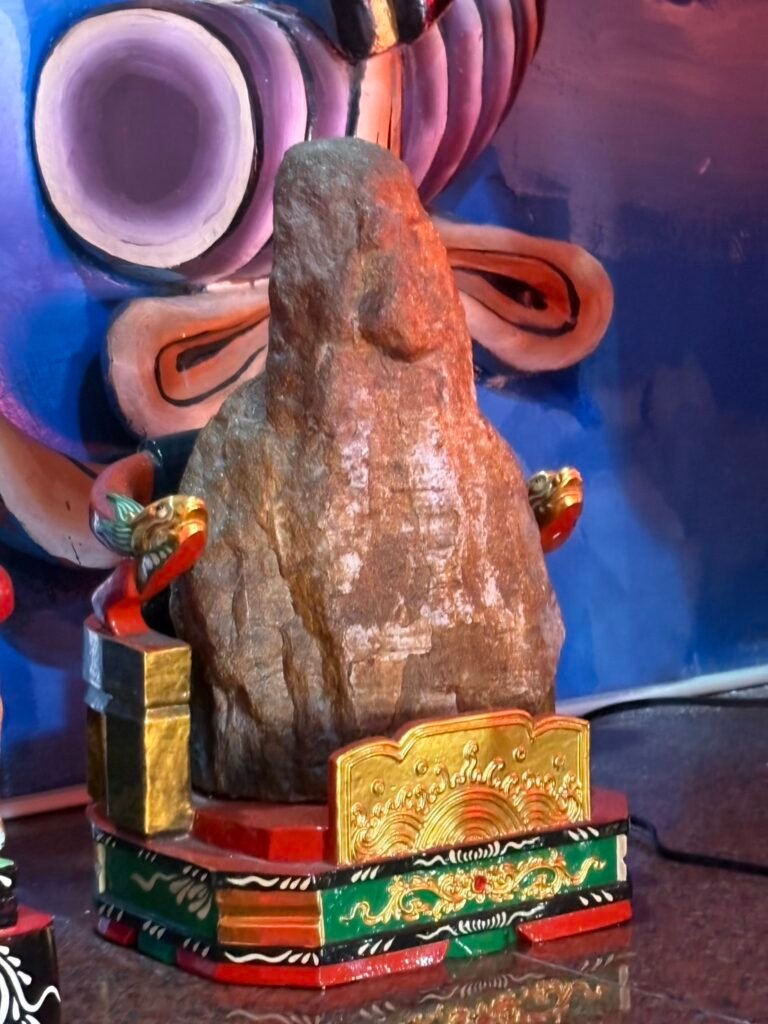
During my visit, the temple caretaker pointed out another remarkable feature that many visitors would probably overlook. Beside the principal altar sits a naturally shaped stone, carefully enshrined upon its own painted throne. According to the caretaker, the stone represents the Earth God (土地公). Unlike the finely carved and painted images surrounding it, this deity is worshipped in its natural form. The contrast is striking. One of the temple’s principal deities originated, according to temple tradition, from a piece of driftwood carried ashore by the sea, while another is represented simply by an unworked stone from the earth. Together they preserve an older layer of Taiwanese folk belief, where sacred power could reside not only in beautifully carved images but also in the natural world itself.
Today, the Black-faced Guanyin remains little known outside northeastern Taiwan. Most visitors are familiar with Guanyin, yet few have encountered this distinctive local tradition. For me, that is precisely what makes these sculptures so compelling. They are not only beautiful works of folk art, but also enduring reminders that Yilan developed its own religious traditions and artistic identity. Through the surviving statues, the temples that continue to protect them, and the stories preserved by local caretakers, the Black-faced Guanyin offers a rare glimpse into a remarkable regional heritage that deserves to be better known.
Join the conversation